
|
|
Stonehill International School Vision StatementWe are an internationally-minded community of spirited learners, dedicated to the development of knowledgeable, caring, confident and responsible global citizens.
|
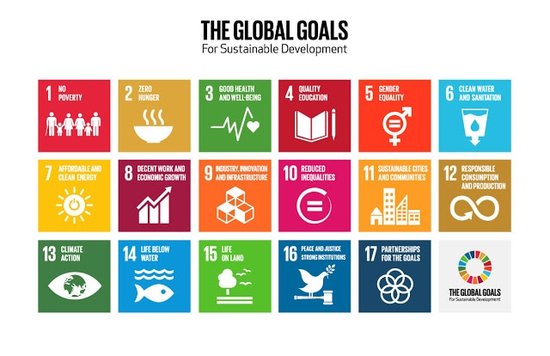
The global goals that provide the blueprint for the world’s development over the next 15 years were ratified by UN member states in New York in 2015. The UN Secretary General, Ban Ki-moon, described the goals as “a to-do list for people and planet, and a blueprint for success.” He went on to add: “We can no longer afford to think and work in silos. Institutions will have to become fit for purpose, a grand new purpose.” The goals are ambitious and important.
As international educators, it is critical that in our own institutions, we do all that we can to ensure our students have a deep understanding of their significance. The Global Goals for Sustainable Development Website highlights the increasing importance for us to view ourselves as Global Citizens with Planet Earth as our shared home.
|
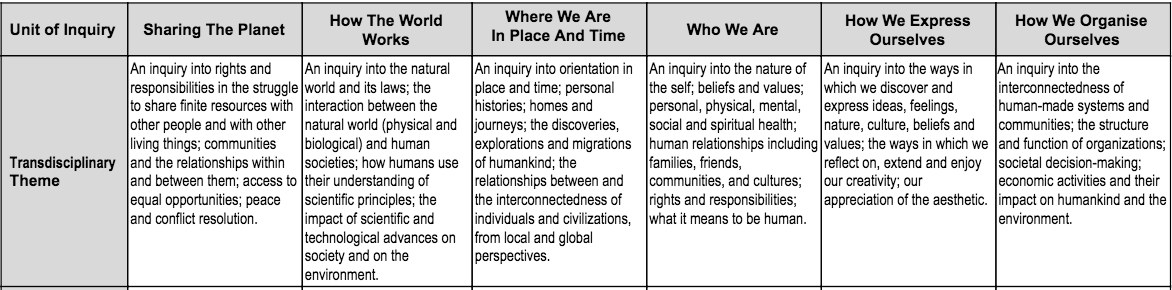
With this in mind, PYP Teachers at Stonehill International School took time to review and revise the Primary Programme of Inquiry to ensure that learners are provided with the essential knowledge, skills and understandings to equip them for the future. Below, you can see how we have developed our curriculum to align with the school's Vision, and with the Global Goals. Each Unit of Inquiry is organised within one of the trans-disciplinary themes outlined below. |
|
The How We Organise Ourselves Unit in P7 enables learners focus on the following Central Idea:
Economic activity relies on systems of production, exchange, and consumption of goods and services. The lines of inquiry for this unit are as follows:
During this unit of inquiry, learners will consider fair trade and unemployment. |
|
The Sharing the Planet Unit in P8 enables learners to focus on the following Central Idea:
People can make choices to ensure the sustainability of the Earth. The lines of inquiry for this unit are as follows:
|
|
The Who We Are Unit in P5 enables learners to focus on the following Central Idea:
The choices people make affect their health and well-being. The lines of inquiry for this unit are as follows:
The Who We Are Unit in P6 enables learners to focus on the following Central Idea:
The effective interactions between human body systems contribute to health and survival. The lines of inquiry for this unit are as follows:
|
|
The Who We Are Unit in P3 enables learners to focus on the following Central Idea:
Awareness of our characteristics, abilities and interests informs our learning and development. The lines of inquiry for this unit are as follows:
Our school offers a programme of international education designed to foster the development of the whole child. Units of Inquiry are developed around transdisciplinary themes. These inquiries are substantial, in-depth and usually last for several weeks. Since these ideas relate to the world beyond the school, students see their relevance and connect with them in an engaging and challenging way. Students who learn in this way begin to reflect on their roles and responsibilities as learners and become actively involved with their education and develop an understanding of the value of education and its important role in society. Our full programme of inquiry can be viewed at www.pypcurriculum.com and learning in action is visible by using the hashtag #SISlearns.
|
|
The Who We Are Unit in P1 enables learners to focus on the following Central Idea:
Learning about ourselves helps us to understand and connect with others. The lines of inquiry for this unit are as follows:
During this unit of inquiry, learners will consider identity and diversity. The How We Express Ourselves Unit in P7 enables learners to focus on the following Central Idea:
People around the world express their values and beliefs in many ways. The lines of inquiry for this unit are as follows:
During this unit of inquiry, learners will consider identity, diversity and prejudice. In addition to the focus on identity, diversity and prejudice in the written curriculum, Primary Teachers at Stonehill have outlined their commitment to developing the learning community's understanding of gender equality by developing a Gender Equality Essential Agreement.
|
|
The Sharing the Planet Unit in P6 enables learners to focus on the following Central Idea:
Water is essential to life, and is a limited resource for many people. The lines of inquiry for this unit are as follows:
|
|
The How We Organise Ourselves Unit in P4 enables learners to focus on the following Central Idea:
Communities create systems to meet their energy needs. The lines of inquiry for this unit are as follows:
The How The World Works Unit in P7 enables learners to focus on the following Central Idea:
The human ability to harness forms of energy impacts society and the environment. The lines of inquiry for this unit are as follows:
The Sharing The Planet in P8 enables learners to focus on the following Central Idea:
People can make choices to ensure the sustainability of the Earth. The lines of inquiry for this unit are as follows:
|
|
The How We Organise Ourselves Unit in P7 enables learners to focus on the following Central Idea:
Economic activity relies on systems of production, exchange, and consumption of goods and services. The lines of inquiry for this unit are as follows:
|
|
The How We Organise Ourselves Unit in P3 enables learners to focus on the following Central Idea:
Communities make efforts to create transportation systems that meet their needs. The lines of inquiry for this unit are as follows:
The How We Express Ourselves Unit in P4 enables learners to focus on the following Central Idea:
Imagination is a powerful tool for extending our ability to think, create and express ourselves. The lines of inquiry for this unit are as follows:
The How The World Works Unit in P5 enables learners to focus on the following Central Idea:
People apply their understanding of forces and energy to invent and create. The lines of inquiry for this unit are as follows:
The Where We Are In Place And Time Unit in P8 enables learners to focus on the following Central Idea:
Human ingenuity and technology continue to evolve and influence the way people live. The lines of inquiry for this unit are as follows:
|
|
The Who We Are Unit in P7 enables learners to focus on the following Central Idea:
Human response to challenges and opportunities shapes who we are. The lines of inquiry for this unit are as follows:
During this unit of inquiry, learners will consider conflict, migration, exploration and borders (social and political) |
|
The How We Organise Ourselves Unit in P2 enables learners to focus on the following Central Idea:
People play different roles in the communities to which they belong. The lines of inquiry for this unit are as follows:
The How We Organise Ourselves Unit in P3 enables learners to focus on the following Central Idea:
Communities make efforts to create transportation systems that meet their needs. The lines of inquiry for this unit are as follows:
The How The World Works Unit in P4 enables learners to focus on the following Central Idea:
The design of buildings and structures is dependent on environmental factors, human ingenuity and available materials. The lines of inquiry for this unit are as follows:
The How We Organise Ourselves Unit in P6 enables learners to focus on the following Central Idea:
Physical and virtual public spaces provide people with opportunities to make connections and establish a sense of community. The lines of inquiry for this unit are as follows:
The Where We Are in Place And Time Unit in P7 enables learners to focus on the following Central Idea:
Earth's changing geology has an impact on human interactions and settlement. The lines of inquiry for this unit are as follows:
The Sharing The Planet Unit in P8 enables learners to focus on the following Central Idea:
People can make choices to ensure the sustainability of the Earth. The lines of inquiry for this unit are as follows:
|
|
The How We Organise Ourselves Unit in P4 enables learners to focus on the following Central Idea:
Communities create systems to meet their energy needs. The lines of inquiry for this unit are as follows:
The How We Organise Ourselves Unit in P5 enables learners to focus on the following Central Idea:
Many products go through a process of change before they are consumed or used. The lines of inquiry for this unit are as follows:
The Sharing The Planet Unit in P6 enables learners to focus on the following Central Idea:
Water is essential to life, and is a limited resource for many people. The lines of inquiry for this unit are as follows:
The How The World Works Unit in P7 enables learners to focus on the following Central Idea:
The human ability to harness forms of energy impacts society and the environment. The lines of inquiry for this unit are as follows:
The How The World Works Unit in P8 enables learners to focus on the following Central Idea:
The changes materials go through pose challenges and provide benefits for society and the environment. The lines of inquiry for this unit are as follows:
|
|
The How The World Works Unit in P6 enables learners to focus on the following Central Idea:
Changes in the Earth and its atmosphere have impacts on the way people live their lives. The lines of inquiry for this unit are as follows:
The Sharing The Planet Unit in P8 enables learners to focus on the following Central Idea:
People can make choices to ensure the sustainability of the Earth. The lines of inquiry for this unit are as follows:
|
|
The Sharing The Planet Unit in P1 enables learners to focus on the following Central Idea:
Living things have certain requirements in order to grow and survive. The lines of inquiry for this unit are as follows:
The Sharing The Planet Unit in P3 enables learners to focus on the following Central Idea:
When interacting with natural habitats, humans make choices that have an impact on other living things. The lines of inquiry for this unit are as follows:
The Sharing The Planet Unit in P5 enables learners to focus on the following Central Idea:
Over time, living things need to adapt in order to survive. The lines of inquiry for this unit are as follows:
The Sharing The Planet Unit in P7 enables learners to focus on the following Central Idea:
Living things depend on each other and the environment in which they live. The lines of inquiry for this unit are as follows:
The Sharing The Planet Unit in P8 enables learners to focus on the following Central Idea:
People can make choices to ensure the sustainability of the Earth. The lines of inquiry for this unit are as follows:
|
|
The Sharing The Planet Unit in P1 enables learners to focus on the following Central Idea:
Living things have certain requirements in order to grow and survive. The lines of inquiry for this unit are as follows:
The Sharing The Planet Unit in P2 enables learners to focus on the following Central Idea:
Animals and people interact in different ways in different contexts. The lines of inquiry for this unit are as follows:
The Sharing The Planet Unit in P3 enables learners to focus on the following Central Idea:
When interacting with natural habitats, humans make choices that have an impact on other living things. The lines of inquiry for this unit are as follows:
The Sharing The Planet Unit in P4 enables learners to focus on the following Central Idea:
Plants are a life-sustaining resource for us and other living things. The lines of inquiry for this unit are as follows:
The Sharing The Planet Unit in P5 enables learners to focus on the following Central Idea:
Over time, living things need to adapt in order to survive. The lines of inquiry for this unit are as follows:
The Sharing The Planet Unit in P7 enables learners to focus on the following Central Idea:
Living things depend on each other and the environment in which they live. The lines of inquiry for this unit are as follows:
The Sharing The Planet Unit in P8 enables learners to focus on the following Central Idea:
People can make choices to ensure the sustainability of the Earth. The lines of inquiry for this unit are as follows:
|
|
The How We Organise Ourselves Unit in P2 enables learners to focus on the following Central Idea:
Stories can engage their audience and communicate meaning. The lines of inquiry for this unit are as follows:
The How We Express Ourselves Unit in P3 enables learners to focus on the following Central Idea:
Celebrations and traditions are expressions of shared beliefs and values. The lines of inquiry for this unit are as follows:
The How We Express Ourselves Unit in P7 enables learners to focus on the following Central Idea:
People around the world express their values and beliefs in many ways. The lines of inquiry for this unit are as follows:
|
|
|
